
Best Lawn Care for Large Lots That Holds Up
- LawnLogIQ

- May 26
- 5 min read
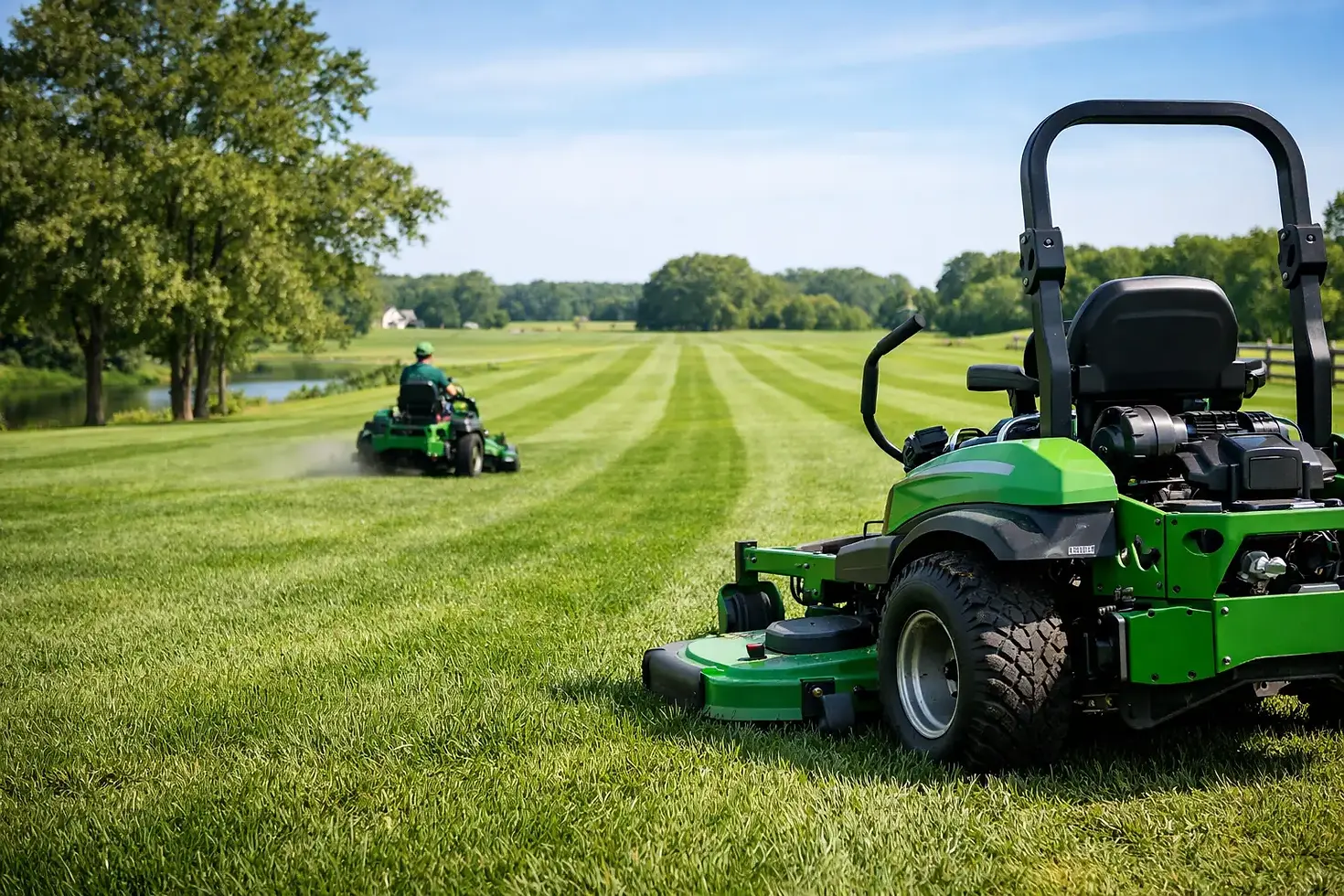
A large lawn exposes every weakness in a standard treatment program. What looks acceptable on a quarter-acre often breaks down across one acre, two acres, or more. If you are searching for the best lawn care for large lots, the answer is rarely more product. It is better management - tighter diagnostics, better timing, and a plan built around how a bigger property actually behaves.
That distinction matters because large lots do not fail evenly. One section holds moisture and stays dark green. Another dries out first and thins under heat. The front may have stronger soil chemistry from years of lighter use, while the back struggles with compaction, shade pressure, or grub history. Commodity lawn care tends to flatten all of that into a generic schedule. On a large property, that approach becomes expensive guesswork.
What makes the best lawn care for large lots different
The best lawn care for large lots starts with variability. Bigger properties have more microenvironments, more stress points, and more opportunities for small issues to become visible defects. You are not managing one uniform surface. You are managing a collection of zones that happen to share an address.
This is why management outperforms maintenance. A traditional 5-to-7-step program is designed for operational simplicity, not site-specific results. It assumes average soil, average pressure, and average timing. That may be adequate for a modest suburban lawn with few complications. It is usually not enough for a large lot where disease pressure, fertility demand, weed encroachment, and irrigation inconsistency show up differently across the property.
A premium large-lot program should begin with data. Soil chemistry, cation balance, pH, organic matter, and nutrient reserves all influence how turf responds over the season. Without testing, fertilizer is a guess. With a large lawn, bad guesses scale quickly.
Why generic treatment schedules underperform
Most homeowners with larger properties have already seen the pattern. The company comes out on schedule, applies the same material every few weeks, and leaves behind a flag in the lawn. Some areas improve. Some never do. The explanations stay vague.
The issue is not just product quality. It is program design.
Generic schedules are built around route density and labor efficiency. They are not built around triweekly inspection intervals, mid-season adjustments, or zone-specific correction. A large lot needs more observation because conditions shift faster than a calendar-based plan can account for. Crabgrass pressure after a wet spring, localized chlorosis from high pH, grub vulnerability in historically affected sections, and late-summer thinning from shallow rooting all require active oversight.
We do not guess; we test. That principle becomes even more valuable as lot size increases. The larger the property, the more expensive it is to be casually wrong.
Soil testing is not optional on a large property
On small lawns, poor soil can hide behind irrigation, frequent mowing, or sheer visual tolerance. On large lots, it usually becomes obvious. Color inconsistency, weak density, broadleaf breakthrough, and reduced summer endurance often trace back to unresolved soil conditions.
A proper soil analysis does more than identify nutrient shortages. It reveals how the lawn is functioning. If phosphorus is adequate but potassium is weak, the prescription should reflect that. If the pH is limiting nutrient availability, adding more fertilizer without correcting the chemistry is inefficient. If calcium and magnesium ratios are skewed, structure and uptake may be affected. These are agronomic issues, not cosmetic ones.
For homeowners in Bartlett and the surrounding West and Northwest Chicago suburbs, this matters because local soils are not uniform. Some neighborhoods sit on heavier, slower-draining soils. Others have imported topsoil of inconsistent quality from original construction. Large lots often include fill variation, tree competition, and sections with very different traffic patterns. A lab-backed starting point creates accountability and prevents wasted applications.
High-frequency oversight beats occasional service
Large-lot turf does not need more visits for the sake of appearances. It needs more frequent evaluation so problems are caught before they spread. That is a very different philosophy.
A high-frequency management model allows for earlier intervention on weeds, stress, insect pressure, and nutritional drift. Triweekly oversight is especially effective because it narrows the gap between cause and response. If a section begins to lose density, the issue can be diagnosed while it is still correctable. If broadleaf weeds begin pushing through in a specific zone, control can be applied before they mature and widen the problem.
This is one of the clearest dividing lines between premium lawn management and basic lawn treatment. A basic provider delivers scheduled applications. A true management program monitors biological health, documents changes, and adjusts inputs with intention.
The best lawn care for large lots is custom, not uniform
Uniform applications across non-uniform ground are one of the most common reasons large lawns plateau. A bigger property typically contains full-sun turf, shaded turf, wetter edges, hotter slopes, and high-visibility areas that deserve tighter standards. Treating every square foot the same may be operationally convenient, but it is not agronomically disciplined.
Custom nutrient planning matters here. Turf in aggressive spring growth does not need the same feeding strategy as a shaded back section that is more prone to stretch and disease. Areas with a history of weeds may require tighter post-emergent monitoring. Sections vulnerable to grub pressure should not be left to chance.
This is also where hand-applied treatment work has real value. On large lots, precision matters more than speed. Correct placement, measured rates, and visible accountability outperform broad, generic coverage. When a provider can explain why a treatment was made, what condition triggered it, and what result is expected, you are no longer buying a spray visit. You are buying agronomic oversight.
Water, mowing, and expectations still matter
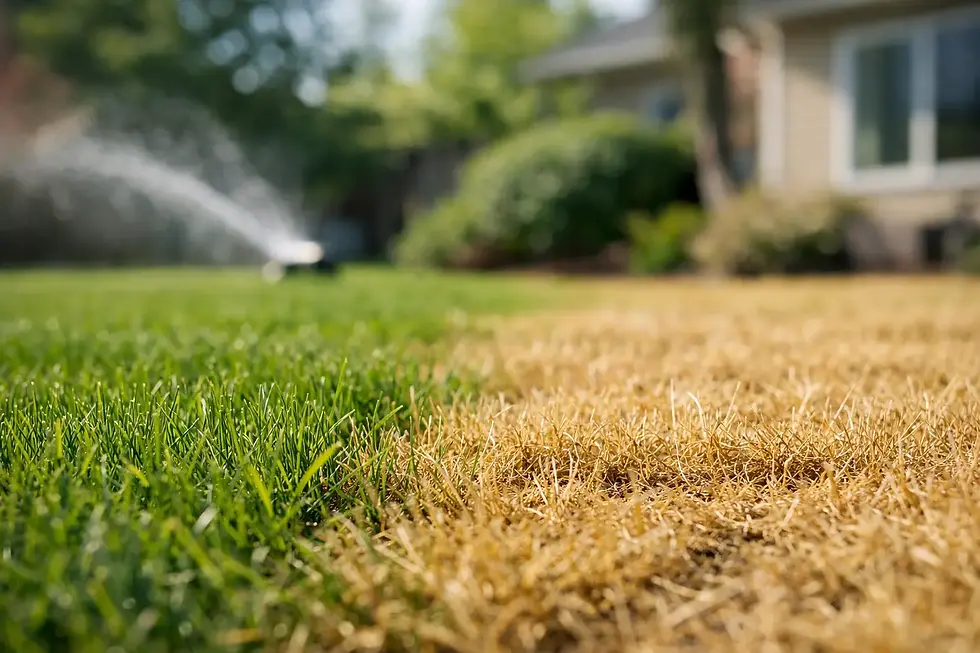
Even the best program cannot fully overcome poor mowing or inconsistent irrigation. Large-lot owners often have more complex watering patterns, and that can create dramatic turf differences over the same season. Heads may not cover evenly. Some sections may be overwatered while perimeter areas stay dry. The result is uneven rooting, disease susceptibility, and color separation.
Mowing height is another major variable. Cutting too low on a large lot usually starts as an efficiency decision and ends as a turf quality problem. Short mowing reduces stress tolerance and exposes weaker areas faster, especially in summer. A premium lawn program should account for these operational realities and explain how homeowner practices affect outcomes.
That said, there is a trade-off. Higher standards on a large lot require more discipline. If your goal is simply acceptable green coverage from the street, a low-intervention plan may be enough. If your goal is a resilient, high-performing lawn with consistent density and color across a larger property, the bar is higher. So is the level of management required.
What to look for in a provider
The right provider for a large lot should sound more like a turf manager than a route technician. Ask how they diagnose soil conditions, how often they inspect between major seasonal transitions, and whether they adjust nutrient planning based on testing. Ask how they handle localized weed pressure, grub prevention, and seasonal documentation.
You should also pay attention to how they talk about process. If every answer points back to a standard package, that is a warning sign. Large lots expose the limits of one-size-fits-all service. A serious provider should be able to explain site variability, timing windows, and why certain interventions happen when they do.
At the premium end of the market, the value is not in more treatment for the sake of treatment. It is in fewer mistakes, earlier detection, and a cleaner chain of reasoning from diagnosis to application. That is what separates elite results from decent results.
For homeowners who care about curb appeal, property standards, and long-term turf performance, the lawn should be managed as a living system. That is the standard LawnLogIQ was built around, and it is why larger properties benefit the most from a science-first model.
A large lot will always ask more of a lawn program. The good news is that it also rewards precision more clearly. When the plan is built on testing, observation, and custom correction, the lawn stops reacting and starts performing.

Comments