
LawnLogIQ June Lawn Care 2026 Update

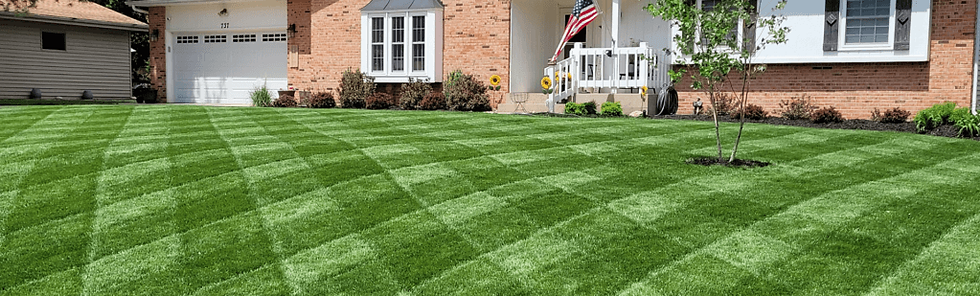
Your June lawn care guide has arrived, and with it comes the true beginning of summer weather. As the heat builds, your cool-season turf undergoes a shift in how it grows and handles stress. This month, our primary focus is proactive defense—protecting your root systems from unseen underground pests, clearing out annoying surface pests, and navigating seasonal weather patterns.
Here is what you need to know to keep your lawn thriving and comfortable this month. This is a long one, so enjoy!
1. The Ultimate June Lawn Care Defense: Our 1-2 Punch Insect Treatment
Right now, beneath the surface, annual white grubs are transforming into beetles, which will fly clumsily around your yard and drop eggs into your lawn's thatch. These eggs will hatch in mid-to-late summer, and the new, baby grubs will immediately begin chewing on your lawn’s root system. If left untreated, they can completely sever the roots, turning beautiful green turf into brown, dead patches that roll up like a carpet.
To help control the grub population, we are launching our preventative grub control applications between June 10 and June 25, as soil temperatures indicate this is the optimal window for this treatment.
Critical Action Required: Watering Within 24 Hours
Grub insecticide is highly volatile, meaning that if it's left on the grass blades, the sun will break it down, and it will lose efficacy quickly. For maximum results, grub prevention needs to move past the grass blades down into the soil, and your deep watering carries it there perfectly.
The 24-Hour Rule: Unless we've coordinated a different plan for your property, please ensure your lawn receives 0.25 inches of water (via irrigation or heavy rainfall) within 24 hours of our application; 48 hours is the absolute maximum. After 48 hours, the application will likely be ineffective.
If you don't have an automated system, a standard lawn sprinkler run for about 20–30 minutes per area will generally hit this target. Getting this timed correctly ensures the product stays chemically viable and protects your lawn all season long.
If you'd prefer NOT to have grub insecticide on your lawn, PLEASE LET ME KNOW ASAP, and we'll skip this treatment!
OPTIONAL BONUS: Maximize Your Protection: Add Tick & Surface Insect Control
Since we will already be on your property applying insecticide, now is the perfect time to request our tick and surface insect killer add-on.
This creates a powerful 1-2 punch for your property:
The Subsurface Hit: The grub control penetrates deep into the root zone to stop underground damage.
The Surface Hit: The surface treatment instantly targets active ticks, fleas, ants, and chinch bugs roaming the grass blades.
By combining these treatments, you knock out both underground threats and structural backyard pests in one single visit, giving you complete peace of mind for summer outdoor activities. The additional cost for tick and surface insect treatment starts at $89. Lawns over 10,000 sq ft will be prorated accordingly. Please contact me if you're interested.
IMPORTANT NOTE: If you decide to add tick treatment to your service, please allow the application to dry for a minimum of 2 hours BEFORE watering the grub treatment in. The tick treatment must dry to become effective. A minimum of 2 hours of dry time before a heavy watering is required for both applications to be effective.
2. Summer Heat & Disease
The local lawns we manage are primarily cool-season grasses (like Kentucky Bluegrass, Tall Fescue, & Fine Fescue). These grasses thrive when temperatures are in the 60s and 70s. Once daytime highs consistently exceed 80°F, the plants naturally slow their growth to conserve energy and enter a semi-protective state to cope with the heat.
When high heat is combined with dry soil, the grass can quickly show signs of heat stress—wilting, taking on a dull blue-gray tint, or holding onto footprints long after you’ve walked across it.
Heat stress can sometimes be mistaken for a fungus called Ascochyta Leaf Blight. With the shifting weather patterns we’ve seen recently, you might notice uniform, straw-colored patches or bleached, white tips appearing across the lawn over the next few weeks.
Here is what is actually going on:
Weather-Driven: This fungus is triggered by sudden weather shifts—specifically when hot, dry spells quickly follow periods of heavy, frequent rainfall. (This just happened.)
Bleached, Not Dead: Ascochyta primarily attacks the upper part of the grass blade, draining it of color. The crown and the root system of the plant remain completely healthy and intact. Your lawn is not dying; it is just temporarily bleached.
Skip the Fungicide: Because this is an environmental, cosmetic condition that doesn't threaten the life of the turf, it is not worth the expense of a fungicide treatment.
As the weather stabilizes, the turf will naturally grow out of it. Regular mowing
as the grass begins to grow again will gradually remove the bleached tips, revealing the healthy green growth underneath. To avoid this fungus, sharpen your mower blades, mow only a completely dry lawn, slightly raise your height of cut, do not mow when your grass is dormant or under heat stress, and water deeply and infrequently. See below for more on watering and mowing habits.
3. Mowing Adjustments for June
The way your lawn is mowed right now directly impacts how well it handles the summer sun. The number one rule for June is to mow high. But what does HIGH mean?
Raise the Blade: We strongly recommend keeping your mowing height at 3 to 3.5 or 4 inches throughout the summer. I personally go up from 2.5" to 3" or 3.5" max. You do what looks best to you. Don't guess on the height. Pull out a ruler and measure the length of the grass blade from the dirt to the tip of the blade! Cut it to the numbers above.
Why knowing your height of cut matters: Taller grass blades act like tiny shade umbrellas for the soil. This keeps soil temperatures cooler, slows down water evaporation, and prevents opportunistic summer weeds from germinating. But blades of grass that are too long trap too much moisture, creating a terrific environment for fungus that can wipe out your lawn in a weekend. We need to balance moisture retention with airflow. Try not to let it begin to lay over. That's a clear sign it's much too long.
The 1/3 Rule: Never remove more than 1/3 of the total grass blade length in a single mowing session to avoid shocking the plant. If possible, mow only when the grass actually needs it. If you cut your grass to 3 inches, cut it at 4 inches. Regardless, try not to remove more than 1/3 of the blade at any one time. If you cut only when the grass needs it, you'll find you'll be doing a ton of mowing, sometimes 3 times per week, in spring and fall, and very little in summer, possibly skipping weeks.
Sharpen Your Blade: This has been mentioned several times already, but it's the MOST important thing you can do. A typical homeowner needs to sharpen at least 2 times per year. I personally have 4 sets of sharpened blades ready to go at any one time, and I get them all sharpened over the winter.
4. Smart Watering Guidelines
In June, daily light sprinkles do more harm than good—they encourage
shallow, lazy root systems and create a humid canopy that's perfect for turf diseases.
Instead, we want to practice deep and infrequent watering.
The Weekly Target: Your lawn needs roughly 1 to 1.5 inches of water per week to remain green and viable, combining rainfall and supplemental irrigation. If a severe heatwave strikes, that requirement can rise to nearly 2 inches.
Frequency: Instead of watering a little bit every day, run your system 2, maybe 3 times a week, running zones long enough to soak the soil deeply (typically 30–45 minutes for rotors, or 15–20 minutes for high-efficiency spray heads). If you have time, do a water audit. Place cups or catch basins in your yard and time how long it takes for .5" of water to accumulate in those zones. This will provide you with an easy way to determine how long to run each zone to get the exact amount of water needed for the week. WARNING: Putting down .5" of water on a lawn is usually A LOT more water than we think! As an example, a 5,000sq ft yard would need nearly 1,600 GALLONS! Let's hope for rain, OR you can let it go dormant. See below...
The Ideal Time: Always water in the early morning hours (between 5:00 AM and 9:00 AM). This allows the water to soak into the root zone before the hot afternoon sun evaporates it, and ensures the grass blades dry out during the day, keeping fungal diseases at bay. Never water at night.
Dormancy: When summer heat gets intense and rainfall becomes scarce, cool-season lawns have a built-in survival mechanism: dormancy. Think of it as hibernation for your grass.
When the turf goes dormant, it stops growing and turns a straw-brown color. This can look alarming, but it is actually a smart strategy the plant uses to protect its crown and root system by letting the older grass blades drop offline to conserve water and nutrients.
A healthy lawn can safely remain dormant for 3 to 4 weeks without permanent structural damage, but it requires specific care to bounce back fully when cooler weather returns.How to Handle a Dormant Lawn:
Minimize Foot and Equipment Traffic: When grass is dormant, it loses its elasticity and ability to recover from mechanical bruising. Limit heavy foot traffic, pet activity, and unnecessary equipment on brown areas. Walking or driving over dormant turf can fracture the crowns of the grass plants, turning a temporary cosmetic brown spot into a permanently dead patch.
Mow with Caution: If the lawn has completely stopped growing due to dormancy, stop mowing it. If only parts of the lawn are dormant, set your mower to its highest setting, avoid the brown zones as much as possible, and ensure your mower blades are razor-sharp to avoid tearing fragile plants.
The "Keep-Alive" Watering Strategy: If you choose not to irrigate heavily to keep the lawn green, you still need to protect the root architecture during extended dry spells. If it hasn't rained in over 3 weeks, apply 0.25 to 0.5 inches of water once a week. This won't green up the lawn, but it keeps the soil hydrated just enough to keep the crown alive until fall.
Do Not Apply Fertilizer: Never try to "feed" a brown, dormant lawn back to health with high-nitrogen fertilizers. Forcing a dormant plant to push out new green top growth when it is trying to rest will completely exhaust its food reserves and can kill the turf.
Thank you for partnering with LawnLogIQ! By combining our precise science-driven applications with smart mowing and watering practices at home, we’ll keep your property resilient, healthy, and pest-free all summer long. Stay cool and please reach out with questions!
Paul
LawnLogIQ
847-220-4680


Comments